
Xu Xuanping’s Thirty-Seven Forms, The Gateway to Shadowboxing
Most Tai Chi practitioners practice the art for health. This typically involves moving slowly through a sequence of movements that was established quite some time ago, and calling it done. You could look on the movements (or ‘forms’) of Tai Chi as words in a beautiful poem we now call the long form (in contrast to the many abridged, or ‘short’ versions that have arisen in the last seventy years). Tai Chi practitioners tend to learn and then recite this poem over and over until they can do it from memory, but learning by rote often lacks a depth of understanding. There’s nothing wrong with being able to recite a beautiful poem but wouldn’t you prefer to know what the words within it meant? Understanding the individual words should contribute to a greater appreciation of the themes and concepts contained within that poem. And if we understand the words, it would lead to being able to create new poems, or prose. The same is true with Taijiquan; were we to know more about these movements, know their purpose, we would be better situated to create new permutations and combinations ourselves, like a ‘freestyling’ rapper with a well-stocked vocabulary.
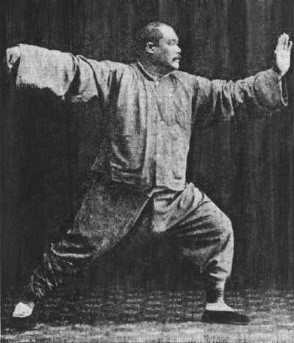
If you break the Tai Chi long form down, you would find there are more or less thirty-seven individual movements. I’d say that styles vary in the way they count them, but to be honest it even varies from school-to-school within the same style. Is there merit to learning and practicing these thirty-seven forms individually – not at the expense of the long form but in addition to it? From a martial perspective, training this way can yield fresh opportunities to see and create openings in a fight; from a movement perspective, this encourages the mind to open and see the forms beyond being part of a long piece of preset choreography. Increasing your capacity to adapt the forms to different situations should improve your brain’s neuroplasticity, and (as a bonus) with increased neuroplasticity comes side benefits like depression relief (1).
So, er, you mentioned Xu Xuanping
So, who is this 許宣平 (Xǔ Xuānpíng) (hereafter: XXP) mentioned in the title? To try and answer that, let’s turn the clock back to the Tang dynasty [唐代 (Tángdài)] (618-907 CE) – one of China’s golden ages. In addition to technological advancements like woodblock printing and tracking time, it was also an important period for Daoism and Buddhism, which both flourished under the Tang dynasty’s rule; It is also considered China’s greatest era for poetry. Enter: XXP, a Daoist ascetic and poet of the Tang dynasty. He was said to have been born not far from Shanghai, in the 新安 (Xīn’ān) prefecture (2) of 歙縣 (Shèxiàn) [Shè county], (now a part of 安徽 (Ānhuī) province), and was described as having been very tall, with a beard down to his belly button, and hair down to his feet. But it was Xu’s blend of Daoism, nature and poetry, which caught the attention of bad-boy poet 李白 (Lǐ Bái).
Li is one of the most celebrated Chinese poets of all time and after reading Xu’s 《庵壁題詩》 [“Inscription on the Monastery Wall”], a poem which speaks of the joys and beauty of the hermit life, Li attempted to seek him out. The two poets then had a sort of graffiti rap-battle when, after arriving to see Xu, Li found that he was off in the mountains doing his own thing. Li left him a poem (《題許宣平庵壁》 [“Inscription for Xǔ Xuānpíng on the Monastery Wall”]) at the monastery near 望仙橋 (Wàng Xiān Qiáo) [Gazing Immortal’s Bridge], then stayed the night at the monastery before returning home. Upon Xu’s return, Li was long gone, so Xu wrote (what I feel is) a poetic retort (《見李白詩又吟》 [“Upon Reading Li Bai’s Poem”]) where he suggests that for someone seeking out a spiritual master, he didn’t hang around very long, and that maybe Li Bai was too pampered to appreciate the beauty and abundance found in Xu’s ascetic lifestyle, that had been so readily available to him during his visit.

Li to Li
Despite never having met him in person, Li’s poem refers to XXP as a 真人 (Zhēnrén) [(Daoist) Spiritual master – lit. True Person], which is an opinion echoed in the 《楊氏老譜》 (Yáng shì Lǎopǔ) [“Old Ways of the Yang Family” a.k.a. The Yang Family Forty Chapters]. One of the later of these ‘chapters’ is called: 《張三豐承留》 (Zhāng Sānfēng Chéngliú) [“Zhang Sanfeng’s Inheritance”], and it talks about a Daoist practice for mind and body training called; 性命功 (Xìngmìnggōng) [lit. Life Work] being passed down from XXP to none other than 張三豐 (Zhāng Sānfēng), the attributed founder of Taijiquan and a Daoist ascetic of legendary status, however Douglas Wile’s “Lost T’ai-Chi Classics from the Late Ch’ing Dynasty”, cries bunkum. According to Professor Wile there is no published reference to XXP (which he transcribes as Hsü Hsüan-p’ing) being linked to Taijiquan before 許禹生 (Xǔ Yǔshēng)’s 1921 book; 《太極拳勢圖解》 (Tàijíquán Shì Tújiě) “The Illustrated Forms of Taijiquan” (4).
In addition to the martial writings attributed to him in 陳微明 (Chén Wēimíng)’s book (5), XXP is tied to the Taijiquan classics again in the stories that say he studied with Daoist master 李道子 (Lǐ Dàozǐ) at 南岩宮 (Nányán Gōng) [the Southern Cliff Temple, in the 武當山 (Wǔdāng mountains)]. Current research trends suggest, that Li Daozi is the earliest contributor to the classic writings of Taijiquan (6). Stories differ though as, in the Song family Taijiquan manual we hear about 宋遠橋 (Sòng Yuǎnqiáo) (along with six other men) traveling to the Wudang mountains in search of Li Daozi and finding Zhang Sanfeng instead. After training with Zhang, it is said they returned annually to continue their martial training with him (7).
Li Daozi was said to have practiced a martial art known as 先天拳 (Xiāntiānquán) [Natural (as in: Innate) Boxing) – lit. Pre-heaven Boxing] and in contrast, Xu practiced a martial art called 三十七 (Sānshíqī) [(The) Thirty-Seven (Forms)]: both of which are strong candidates for antecedents to Taijiquan. The Song family Taijiquan manual (written by the same Song Yuanqiao as above) says that -in form at least-, Li Daozi’s Xiantianquan is the same thing as XXP’s Sanshiqi, it also claims their Song family Taijiquan is descended from Xu’s Sanshiqi martial art (you can find a list of the Thirty-Seven forms here). The Sanshiqi form list has an exceedingly strong correlation with the Yang family’s individual Tai Chi movement names; but then, there is an event that could possibly be the reason for that…
A Brief Moment in Time at the Beijing Physical Education Research Society
In the 北京體育研究社 (Běijīng tǐyù yánjiū shè) [Beijing Physical Education Research Society] (4), at some point between 1912 and 袁世凱 (Yuán Shìkǎi)’s death in 1916 (but more likely before 1915, when things got busy for Yuan (8)), there was a well-known ‘exchange’ between 宋書銘 (Sòng Shūmíng) and the BPERS founders, who were all top level Yang Taijiquan stylists of the day.
Song Shuming met the aftermentioned author Xǔ Yǔshēng (hereafter: XYS), while XYS was working within the Sports department of 袁世凱 (Yuán Shìkǎi)’s regime. In addition to working at the Regime’s sports department, XYS also taught martial arts alongside Tai Chi luminaries 吳鑑泉 (Wú Jiànquán), and 楊少侯 (Yáng Shàohóu) at the BPERS]. When this ‘Yang gang’ met Song Shuming, he was said to be seventy-two years old. Song was also said to have trounced the thirty-three year old XYS, who was a student of martial arts since he was six and at that time also a famous student of 楊健侯 (Yáng Jiànhóu), third son of the great Tai Chi fighter: 楊露禪 (Yáng Lùchán).
吳圖南 (Wú Túnán), who was one of the leading Tai Chi researchers and practitioners of that time, gave a copy of the Song family manual (one of the two versions (9) of it he had acquired), to 楊少侯 (Yáng Shàohóu), 吳鑑泉 (Wú Jiànquán), and XYS among others, and it seems to have been a key source for their own Taijiquan writings & manuals, and a strong suspect for the source of Taijiquan’s association with Zhang Sanfeng.
Shadow Boxing
Although the forms found within Sanshiqi were frequently practised separately, it was also a common practice (by its practitioners) to string some together into a long, flowing sequence. This was known as 長拳 (Cháng Quán) [Long Boxing], a name that makes reference to the length, continuity and flowing nature of the 揚子江 (Yángzi Jiāng) [Yangtze River], which is also known as the; 長江 (Cháng Jiāng) [Long River].
The spontaneous invention of Long Boxing as a practice within Sanshiqi, is not the creation of new sets of patterns to be trained repeatedly thereafter. It is more akin to improvisation, or shadow-boxing. Practising each of these thirty-seven forms separately, and then trying to perform some of them consecutively but in a new sequence, frees the mind to chain the applications from these forms together when fighting. Taijiquan’s sister art: Baguazhang, has a conceptually similar, freestyling practice known as; 變步 (Biàn Bù) [Changing Step], where you flow between the palm changes.
In Closing
Thinking of Tai Chi practitioners creating their own (temporary) forms puts me in mind of the Virginia Woolf quote about ‘a woman should have a ‘room of one’s own’ for writing fiction’. I think that Tai Chi practitioners should also have a creative space, which allows them a way to practice that incorporates the freedom to make the thirty-seven forms their own. (I feel) practicing the thirty-seven forms of your own style of Tai Chi as Xu Xuanping would have done his, may be the key to greater personal development within our art.
Notes
- Sources: How to Rewire Your Brain: 6 Neuroplasticity Exercises (healthline.com), Adult neuroplasticity: A new “cure” for major depression? (nih.gov)
- 新安 (Xīn’ān) prefecture is today known as the 徽州 (Huīzhōu) district of 歙縣 (Shèxiàn) [Shè county]. Shè county used to be classified under the 江南 (Jiāngnán) [South of the Yangtze] area but it has since been absorbed into the southeastern part of 安徽 (Ānhuī) province.
- This is a 19th century portrait of Li Bai that’s held in the 鼓浪嶼 (Gǔlàngyǔ) Museum, Xiamen, Fujian, China (©WikiCommons).
- Paul Brennan also provides us with a free online version (with English translation) of Xu Yusheng’s book here. In this work Xu Yusheng call’s his group the 京師體育研究社 (Jīngshī tǐyù yánjiū shè) [lit. Capital’s Physical Education Research Society].
- Chen Weiming’s book: 《太極答問, 附單式練法》“Answering Questions about Taiji, including single posture practice methods”(1929) gives the martial songs / writings of XXP as; 八字歌 “The Eight Character Song”, 心會論 “On Mental Understanding”, 周身大用論 “On Fully Using the Body”, 十六關要論 “The Sixteen Key Points”, and 功用歌 “The Song of Function”. You can find a free online version (again by Brennan Translation) here.
- See “Tai Chi, The True History & Principles” by Lars Bo Christensen (2016). ISBN: 978-1539789314.
- Source: “Complete Tai Chi Chuan” (1997), The Crowood Press, Ch. 3 (p.51), by Dan Docherty.
- 袁世凱 (Yuán Shìkǎi) (1859-1916) rose to power during the last part of the Qing dynasty as a military and government official and went on to become a warlord and self-proclaimed emperor of China – despite his lack of popularity with the people. Once Yuan passed away, Song Shuming left Beijing and settled in 保定 (Bǎodìng), where he later passed away.
- After the death of 吳圖南 (Wú Túnán) in 1989, 馬有清 (Mǎ Yǒuqīng)’s copy of the 1908 Song family Taijiquan manual got published. This has been translated into English by Paul Brennan and he has kindly made it freely available to the public here.
Additional References
- Cheng, Tinhung. 《太極拳述要》 (Tàijíquán Shù Yào) [“Tai Chi Transcendent Art”], The Hong Kong Tai Chi Association Press, Hong Kong, (1976). Note: In p.13 of this book, XXP is romanized Hsu Suan Ping, but it has the same hanzi. Also note: the Wade–Giles version of romanization is: Hsü Hsüan-p’ing. ISBN 962-85164-2-6
- Wile, Douglas “Lost T’ai-chi Classics from the late Ch’ing Dynasty” State University of New York Press, Albany, (1996). ISBN 0-7914-2654-8
- Zhang Yun (et al) “The Taijiquan Classics – The Essential Translation & Explanation with Commentary on History and Culture”. ISBN 978-0-578-17886-8


So cool to here more about Tai Chi that is not the same old shit. I found this helpful thank you.