
Primavera
Opening
Do you ever get that feeling that you are stuck at the same level in your training? Seeking out a way to take your skills to the next level requires putting new lifestyle habits in place to encourage positive change, and new growth. New growth requires change, and change can be scary to some, and uncomfortable for others. It is a natural survival mechanism to stick with what’s been working so far but too much caution and you may never leave where you are now. Chapter 16 of the Daodejing suggests that every period of activity is followed by one of passivity. It’s the way of things, a natural cycle of revolution, so why stress it. Here’s my translation of the bit I’m talking about;
萬物並作,吾以觀復。 (Wànwù bìng zuò, wú yǐ guān fù.)
All things alike go through their processes of activity,
and [then] we see them return [to their origin (i.e. non-activity)].
夫物芸芸,各復歸其根。 (Fú wù yúnyún, gè fùguī qí gēn.)
When things have displayed their luxuriant growth*,
we see each of them return to the root.
歸根曰靜,是謂復命。 (Guīgēn yuē jìng, shì wèi fùmìng.)
This ‘returning to the root’ is what we call the state of stillness;
and that stillness may be called a reporting that they have fulfilled their appointed end.
*(as in the world of flora and agriculture)
‘Stillness’ in these lines can be considered synonymous with the stagnancy I’m talking about. Remaining static in our habits and behaviour, will not, therefore encourage change. So, how do we find the new habits that will take us to that next level?
Here’s a few ideas to get you started…
- Let go of what’s not working
When it is obvious to you what is not working, let it go. If it is not obvious, then look through the following points to see if they can help instead.
2. Take a step back
Take a look at the situation with a sense of detachment from it. Albert Einstein once said (in relation to the null result of the Michaelson-Moreley experiment);
“No problem can be solved by the same kind of thinking that created it.”
Albert Einstein
3. Examine the details
Repeating the same behaviour and expecting a different result is considered the very definition of madness. That said, in order to refine skills we are often taught to use repeated actions. The trick is to engage with the repetition and see the differences from the last time you did it, and maybe try imposing some difference. “Deliberate Practice” is conceptually very similar to this.
If you are feeling that life is like the Ouroboros (from the Ancient Greek: Oὐροβόρος) [Snake that eats itself], then you might be failing to appreciate that even that continuous cycle has two halves: the head/tail, and the body. With this metaphor, the head eating the tail becomes the new stage overcoming the last, the body is the long period of slow progression, doing what seems like the same thing, over and over, before you reach the head/tail again. It is important to appreciate every mouthful of that meal. The details are important and interesting but we should not obsess over them, otherwise we will never reach that next bite. Which leads nicely to…
4. Don’t force it
Celebrated Xingyiquan teacher, 郭雲深 (Guō Yúnshēn) once said (1) ;
練拳術不可固執不通。 (Liàn quánshù bùkě gùzhí bùtōng)
[When] practising the boxing arts,
[you] cannot be so fixated [as to] get in your own way.
Focus on your part, and let the universe take care of the rest. Change will come – it’s unstoppable. The only thing that remains constant in life is change itself. So, let it happen. In case you are in doubt, this doesn’t mean I am advocating doing nothing here, I am simply saying don’t try and force it. Using force might work for Luke Skywalker, but in this situation it is better to relax, and let it happen. Maybe take a break – just don’t make it too long!
5. Rediscover your original inspiration
Why did you start doing this? In addition to what originally inspired you, find what still inspires you.
6. Brainstorm
Find someone supportive who doesn’t mind listening and throw some ideas out there. Get the ‘brainstorm’ going by coming up with a few silly ideas. This will help overcome the prideful prejudice that every idea has to be perfect.
You can also sit down in front of a writing pad, or computer, and just get writing; ‘Stream of consciousness’ yourself into the act of creation. Try mixing old ideas together, or go to YouTube and see what others are doing. If you do copy an idea, it is worth considering that it is your execution that is the important part for your progression. It should be used to get you moving forward, not as an attempt to rip someone else off. So, if there is credit due, give it. Gratitude is a key ingredient in the recipe for happiness.
7. A map can help
Sometimes it is possible to work out what you need to move on. Once you know, you can make a step-by-step plan to get you there.
8. Focus on something else
Sometimes you need to shake things up, break with your routines. Distracting yourself can sometimes clear a brain-blockage.
9. Take action
Pick one aspect of your training and focus on improving just that piece. I would recommend starting with the easy, quick-wins, then ride the momentum. The Daodejing famously advises that; “The journey of a million miles begins with the single step.” Inertia is the ally of the stagnant.
10. Get some outside perspective
Sometimes you may not be able to see what is right in front of your face, but if you ask a friend you might find that from where they stand the source of the sticking point is obvious.
Growth does not always mean towards the sun
What is Growth? Development can be as different as there are different people looking to do it.
When you are clear about the direction you are trying to move in, it is easier to make progress. Moving ‘forward’ might not be helpful if you and your teacher are at odds over which direction that is.
If I say the Sun lies to the west, and my teacher says its to the east, then s/he will be directing me away from where my goals are understood to be. Here, the key thing is establishing who is in charge of the goals. Sometimes the student yields to the teacher’s choice of direction, and at other times the teacher might need to concede to the student. The latter can be tricky, but when you teach paying adults, but it can happen quite often. Adult students can know what they want from their time with the teacher. Is it traditional pedagogy? No. Is it what the student needs? Maybe not. With this approach the teacher is more like a guide, trying to shape as best they can. Ultimately, if the student wants to pay for disregarding the teacher, then the teacher is left to choose whether to guide, or refuse and risk losing the student. This is a very personalised approach, and challenging for the teacher, but not without its rewards.
Sometimes the path you need to travel is not a straight line. When you are doing ten squats, and want to be able to do twenty, it is extremely clear what you have to do. You fix your will / intention, put in the work and steadily increase your reps until you get there. When the goal is not as easy to define, it can cause conflict with this simple approach. In these cases it can be helpful to grow sideways. Maybe learning a related skill will help you grow overall and the benefits which come from understanding this new skill can assist the skill that you were first struggling with.
For me, covering the syllabus is a key feature of learning a subject. I don’t pretend to have mastered it first time around, to be honest I would think something had gone wrong if I did! But being exposed to everything allows me to get a feel for what it is I’m trying to get good at. I had one teacher who resisted my attempts to outline the syllabus, and this ended up making me feel like he was just making it up as he went along. So, he knows a lot of things, but how could I, as a student get good at any of those things unless we returned to them? How could I request he take me back to something that I see as a key part of the ever-increasing syllabus if that thing was just something he made-up that day?
Teaching is a real art, and with a subject that is more about lifestyle than a completion certificate, it is easy to see why people resist the concept of defining a syllabus. To me, having a defined course is helpful for the student to understand what they are trying to do. The teacher can always define a second course later for additional material, should they feel the need. This leads to the question of trying to define goals for qualititive subjects. If we look at art as it relates to painting on canvas, there is a clear set of goals that occur to me at the beginning of studying the subject. You need to work at the mechanics of holding the brush, mixing colours, etc. the physical tools of the trade. This is the area you should easily be able to put together a syllabus for. When the student has worked through that course, are they ever finished? No, I can’t imagine they are. There are always new physical tools that one could benefit from adding to one’s toolbox, maybe use of a scraper, for example. The point is, even with a basic syllabus, you circle back to the foundational skills time and time again. You are never ‘done’ with this basic course. In classic Japanese martial arts terms, a black belt is simply someone who has covered the basic syllabus to a standard that they can now go and train it again on their own time. After this the Black Belt’s teacher changes position to that of a guide. A way more difficult job!
Closing
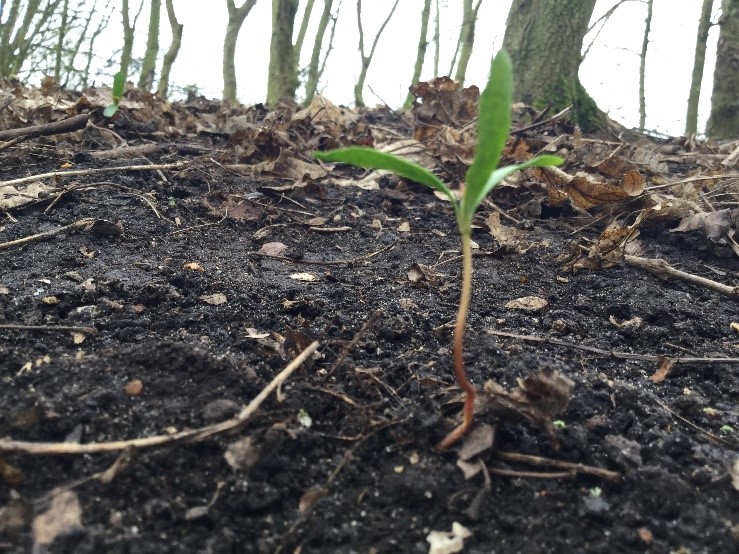
I really hope this brings some assistance to you should you be suffering with stagnancy. When you finally break out of that wintery, stagnant period you will see that glorious primavera (2) [literally: ‘first green’] that shows the new growth. Well done, you made it.
Notes
- This quote by Guo Yunshen can be found in the eleventh section of chapter four of 孫祿堂 (Sūn Lùtáng)’s 《拳意述真》 (Quán Yì Shù Zhēn) [“Authentic Explanations [of] Boxing Concepts”] (1924), which you can read a translation of by Paul Brennan free online here: THE VOICES OF SUN LUTANG’S TEACHERS | Brennan Translation (wordpress.com)
- Primavera is the word for the season of Spring in Spanish, Italian, and Portuguese.

Leave a Reply
Want to join the discussion?Feel free to contribute!