
Fart
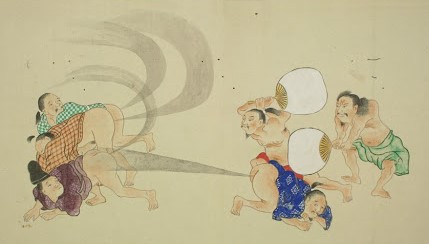
Introduction
Despite the title, this article is actually about humility. If that sounds bold, it’s not meant to be. I’m not looking to preach, or tell anyone how to live their lives here. It’s just, I’ve often found 武德 (Wǔdé) [martial virtues] when presented to martial arts students are frequently lumped together, with no further exploration about what they mean. In writing this, my ambition is to -hopefully- give you something to think about, or possibly discuss with a friend, and maybe amuse along the way.
Virtues
It always struck me as odd to hear one person telling another to be virtuous. Don’t get me wrong, morale character (2) is great, but in order to avoid hypocrisy, the person ‘instructing’ needs to be a paragon of virtue. Telling others how to behave and not living by the same rules yourself, may be unfortunately only too human, but it also lacks self-awareness, and it lacks humility. Daoist philosopher; 老子 (Lǎozǐ) (3), once poetically said something along these lines (see following quote).
「知者不言,言者不知。」
“Those who know, don’t tell; those who tell, don’t know.”
《道德經》 (Dàodéjīng) [The Classic of The Way [and its] Virtue], by 老子 (Lǎozǐ), chapter fifty-six
I read this line as a criticism on how 孔夫子 (Kǒngfūzǐ) [Confucius] (who was around before Lǎozǐ timeline-wise) instructed his followers. Where Confucius thought people started out bad and needed to cultivate virtue to become good, Lǎozǐ thought they started out good, and that ‘civilisation’ was leading us away from being able to -as the Daoists put it- 歸根 (Guīgēn) [Return (to our) Roots].
Later in the Dàodéjīng, Lǎozǐ -somewhat ironically- does raise the subject of virtue. He doesn’t technically tell us to ‘be good’ – directly, instead he phrases it in a way that he niftily avoids the hypocrisy trap, while still stressing the importance and value he places on his three key virtues (see quote);
「我有三寶,持而保之。
“I have three treasures, which I hold and protect;
一曰慈,二曰儉,
The first is Compassion, the second is Frugality,
三曰不敢為天下先。」
[and] the third is to ‘Not dare to be first in the world’ (Humility).”
《道德經》 (Dàodéjīng), chapter sixty-seven
Gone With the Wind
So, when it comes to China’s 三教 (Sān jiào) [Three Teachings] (Confucianism, Daoism, & Buddhism), the Confucians seem to straight out tell you to be virtuous, the Daoists speak of cherishing key virtues, but what about the Buddhists? Chinese Chán Buddhism likes its stories and riddles, so let’s have a (Buddhist related) tale of humility.
A bit of background on our main character before we start. 蘇軾 (Sū Shì) (1037-1101 CE) lived in the 宋朝 [Sòng dynasty] and was a very smart man. A bit of a polymath (and gastronome), he is mostly remembered for his writings, notably his poetry. He was so intelligent, that aged nineteen he passed the highest level exam (4) for Imperial civil service, and later on, that same intellect also got him exiled from it. After the joyful birth of his fourth son, he wrote a poem called 《洗兒》 [“Washing the Child”] (5) about growing up & being intelligent. Here’s my translation of the whole thing (don’t worry, it’s very short);
人皆養子望聰明。
Every person raising a child hopes [for it to be] intelligent.
我被聰明誤一生。
I, by my intellect have, my whole life made mistakes.
惟願孩兒愚且魯,
My only hope [is that] the child be stupid,
無災無難到公卿。
[then it will] not have disasters, [and have] no difficulty becoming a high ranking court official.
His getting thrown out of court doesn’t seem so surprising now! It was while in exile that he took a pen name: 蘇東坡 (Sū Dōngpō). Dōngpō (meaning ‘Eastern Slope’) was a reference to the farm he lived on while banished from public office. Late in life he served as a government official in 瓜洲镇 [Guāzhōu Town], in 江苏省 [Jiāngsū Province], and it was there that he really got into his Chán Buddhism (6). Guāzhōu is situated just across the 長江 [Yangtze River] from 金山寺 [Jīnshān (Golden Mountain) Temple], and Sū became friendly with the temple’s abbot.
One day Sū felt he had achieved the highest level of spiritual awakening, and wrote a poem about it (here’s my translation);
稽首天中天,
Bowing [my] head to the Heavens in the sky,
毫光照大千,
[I received] a hair’s breadth of illumination [from the] great [and] numerous [stars],
八風吹不動,
The Eight Winds blew, [yet I remained] motionless,
端坐紫金蓮。
Sitting upright [on a] purple lotus (7).
Side note: It may help to quickly mention that the ‘Eight Winds’ are a Buddhist categorisation of four sets of opposing influences in life (8).
When Sū had finished the poem, he immediately sent a copy to his friend 佛印 (Fóyìn) [lit. Buddha(’s) Mark] (the abbot). Upon receiving it, Fóyìn wrote a single word on it: 放屁 (Fàngpì), which effectively means: ‘Fart’ – then sent it back. When Sū received the abbot’s response, he was incensed (pun intended!), taking it as a huge insult. He raced across the Yangtze as quickly as he could, and went straight to the temple, seeking out Fóyìn. Once found, he demanded an explanation as to why his friend had written what he did. To which Fóyìn’s reply was;
「八風吹不動, “The Eight Winds blew [and you remained] unmoved,
一屁打過江。」 [but] a single fart made [you] cross the river.”
This ‘mic drop moment’ may read like a punchline, but if the poet wasn’t humbled before, he certainly would have been at this point. In the past, Chán Buddhism has shocked their adepts with responses (sometimes with sticks too!) in order to awaken / enlighten them, so this is totally on brand.
Comeuppance in Combat Sport
Despite traditional martial arts promoting humility as part of their martial virtues, the arrogant fighter has become a bit of a cliché. The problem is, that self-confidence is essential when involved in regular fighting; it’s a strong factor of ‘the fight in the dog’. With a modicum of repeated success (and if left unchecked), that same self-confidence can quickly stray into arrogance. Professional combat sports frequently use the character of the arrogant fighter (hopefully feigned!) in an effort to draw bigger audiences. It is now fairly common for a fighter to ‘trash talk’ their opponent before a match.
Trash talk involves insulting your opponent in order to puncture his ego, with the intention of making him emotional enough to fight with a hurt heart, rather than a clear head. Chinese military mastermind Sūnzǐ (544-496 BCE) also recognized the value of poking at the opponent’s ego, saying;
「怒而撓之; “[If he is] angry, bother him;
卑而驕之,」 [If he is] humble, make him arrogant.”
《孫子兵法》 (Sūnzǐ Bīngfǎ) [The Art of War], by 孫子 (Sūnzǐ),
Ch. 1: 《始計》 [Laying Plans], Section 6.
Globally celebrated heavyweight boxer Muhammad Ali, was a master of trash talk. When he fought Joe Frazier for the third time, Ali said; “It’s gonna be a chilla, and a killa, and a thrilla, when I fight the gorilla in Manila.” Frazier (a black man) was enraged at being called a gorilla, and so, Ali had landed his first blow.
Trash talk can also involve bragging about your own abilities. Ali -again- provides us with another great example;
“I am so fast, that last night I turned off the light switch in my hotel room, and was in bed before the room was dark.”
Muhammad Ali (9)
If trash talk was arrogance personified in advance of the event, ‘clowning’ would be its sister-technique for inside the ring. Clowning typically involves dropping your defences (often the hands, but it can be any sense of ‘guard’ or show of readiness) to insult your opponent by nonverbally suggesting his speed is so much slower than yours – that you can still evade from a position of complete exposure. The idea is for the insulted opponent to lose his cool, and start to take reckless chances with his advances. The audience then either applauds the clown’s bravado, or empathises with the insulted fighter and gets drawn further into the match, hoping to see the insulting braggart ‘put in his place’.
One of the best examples of a clowning comeuppance (that I have seen), happened back in July of 2013, in the mixed martial arts’ Ultimate Fighting Competition. In 2006, Anderson Silva joined the UFC roster, and after a very impressive debut, he fought for the title belt with his second fight. He went unbeaten for over seven years in the UFC, and prior to that, he’d only been defeated a couple of times in the whole of his professional career. It would be easy to see why he could acquire considerable swagger just based on this, but Silva had been using clowning as a technique his whole professional career. And like Muhammad Ali before him, he was a master of antagonising his opponents into fighting emotionally.

Clowning is only effective however, if the ‘clown’ is always faster than his opponent.
The bottom right pic shows Anderson Silva (yellow shorts) getting knocked out with his hands fully down, whereas his opponent (Chris Weidman) has his punch fully extended. Anderson, looking to ‘lean back’ just out of range, had mis-judged the distance. This cost Silva the match, but it also ended up being a much heavier blow: His ‘win column’ never truly recovered after this. Maybe it was karma, maybe age, but it does show, you can’t ‘clown’ forever.
Empty Your Cup
When it comes to being a student of the fighting arts it is always a good idea to be humble. Students of Chinese martial arts are often told to ‘Empty their cup’ (10). What does this mean? Well, an explanation requires another brief story from the Chán Buddhists. Back in the Táng dynasty (618-907 CE) there were two Chán Buddhists; a teacher called 龍潭崇信 (Lóngtán Chóngxìn) [a.k.a. Ryūtan Sōshin (in Japanese)], and his student 德山宣鑒 (Déshān Xuānjiàn) [a.k.a. Tokusan Senkan (in Japanese)]. Having tea one day, the student was waffling on (about all the cool things he knew), and hearing all this, the teacher offered to pour him some more tea. When the tea reached the brim he didn’t stop pouring. The tea began to overflow, making a real mess, at which point the student exclaimed “Stop! The cup is full!”, to which the teacher replied: “You are like this cup. You ask for teaching, but your cup is already full. Before I can put anything new in, you must empty your cup.” The student was humbled, and later went on to become a very successful and influential figure in Chán / Zen.
In Closing
Self-confidence is essential in fighting (and it really helps in life too!) Having too little, brings low self-worth, too much: arrogance. Seeking balance then is essential, and humility is a helpful tool for that.
Humility comes from a proto-European root (Humus), meaning ground / earth, which strikes me as funny as, when fighting, a profound lack of humility can sometimes result a painful return to Earth.
P.S. 新年快樂! (Xīnnián kuàilè!) [Happy New Year!] February 1st, 2022 is the beginning of the Chinese Year of the Water Tiger.
Notes
1. He-Gassen [“Fart Competitions”] is a 200 year old art scroll. Source: https://en.wikipedia.org/wiki/He-gassen
2. The Chinese word for ‘Moral Virtues (/ Moral Character)’ is; 品德 (Pǐndé).
3. Lǎozǐ was said to have been around in the 戰國時代 (Zhànguó Shídài) [Warring States Period] (475-221 BCE), not long after Confucius.
4. The 進士 (Jìnshì) degree.
5. After Chinese babies are born it is customary for the mother and child to convalesce for a full month – this is called: 坐月子 (Zuòyuèzi) [Sitting the Month]. When the month is over, the family invites extended family and friends over to celebrate with a little party called a: 彌月禮 (Míyuèlǐ) [Full Month Ceremony]. In the past (I’ve heard) there were poems to celebrate the new-born, and they were grouped under the heading ‘Washing Poems’, which is what I believe the title of this poem refers to.
6. When Chán Buddhism travelled to Japan it took on the moniker that it is more well-known in the West by: ‘Zen Buddhism’. Zen is the Japanese pronunciation of the Chinse character 禪 (Chán). A very simplified way of looking at Chán Buddhism would be to take Indian Buddhism and mix it with Chinese Daoism (notably the work of 莊子 (Zhuāngzǐ)). Zen is known for its Kōan (in Chinese: 公案 (Gōng’àn) [lit. Contentious Issue]) riddles.
7. The purple lotus flower, originally only found in the Himalayas, has a distinctive yellow coloured centre, hence the middle character (金 (jīn) [golden]) in its name. In Buddhism the purple lotus represents -among other things- spiritual awakening & faithfulness.
8. The 八風 (Bāfēng) [Eight Winds] are specifically found in Buddhism’s “Lokavipatti Sutta” [The Failings of the World]. Here are their names in Chinese (with translation);
稱 (Chēng) [Praise] & 譏 (Jī) [Ridicule]; 譽 (Yù) [Reputation] & 毁 (Huǐ) [Defamation]
利 (Lì) [Gain] & 衰 (Shuāi) [Loss]; 樂 (Lè) [Joy] & 苦 (Kǔ) [Suffering]
9. Although I attribute it (above) to Ali, the originator of this line is unknown. Versions of this had been in circulation in the States since 1917. American comedy duo Abbot and Costello even used a version in a radio sketch in 1945.
10. 「清空你的杯子」 (Qīngkōng nǐde bēizi) [Empty Your Cup]
The UFC 162 pictures are copyright of the UFC. I hope to use them for educational purposes, but will remove them if copyright holder feels this is not fair use.


Leave a Reply
Want to join the discussion?Feel free to contribute!